


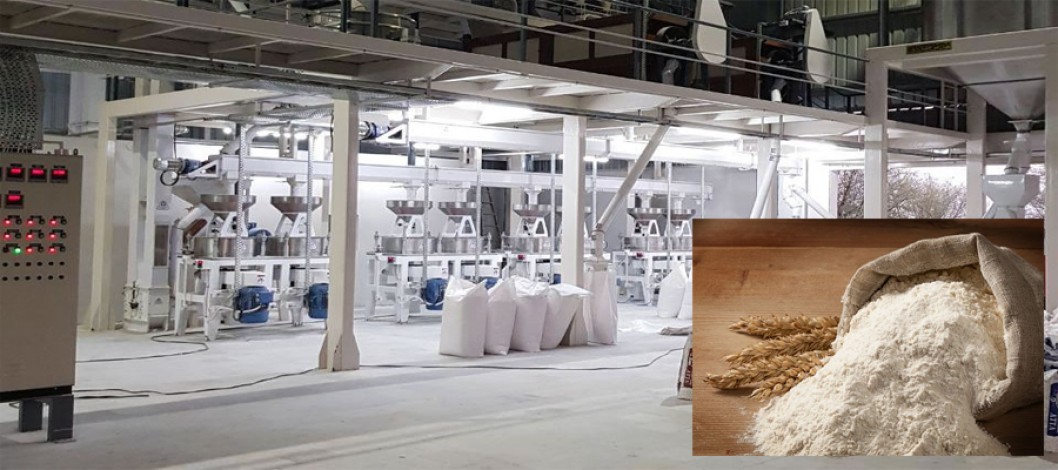
File Photo
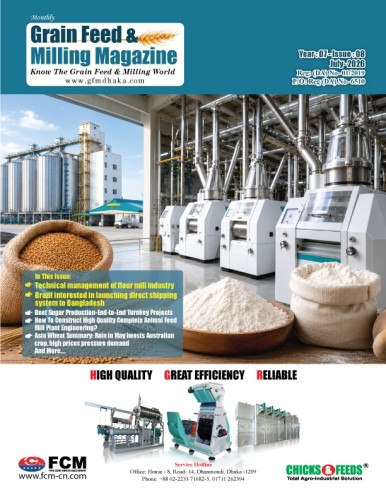
Today, modern flour mills are no longer judged by how quickly they can fix problems, but by how effectively they prevent them. How adopting a more planned and measurable approach to maintenance can reduce downtime, protect flour quality, and increase energy efficiency—providing a realistic framework for maintaining strong mill performance. The goal is to maximize the value of the asset across its life cycle cost (LCC). According to the ISO 55000 standard, achieving excellence in maintenance requires a shift from discrete activities to an integrated “asset management system” that links technical performance, risk, and cost. Flour mills operate under constant mechanical and thermal stress, where even the slightest lapse in maintenance strategy can lead to rapid deterioration of product quality and a sharp increase in energy consumption. Technical management in the flour milling industry drives profitability by optimizing the complex grain processing chain, from raw material sourcing to final packaging. It relies on advanced automation, strict quality control, and preventive maintenance to maximize yield, reduce energy consumption, and ensure consistent flour quality.
1. Process Optimization and Production Control
From inefficient workflows and equipment failures to excessive waste and delayed deliveries, manufacturing bottlenecks can quickly erode your company’s competitive advantage. However, by implementing key manufacturing optimization strategies, you can overcome these limitations and realize your full potential. This guide will explain manufacturing optimization, its benefits, and practical steps to implementing optimization strategies in your manufacturing operations. Modern wheat milling requires a highly controlled, multi-stage process:
*Cleaning and Conditioning: Raw wheat is rigorously sifted, destoned, and magnetically separated to remove impurities. Tempering (adding moisture) follows, which toughens the bran and softens the endosperm for cleaner separation.
*Milling (Breaking & Reduction): The conditioned wheat passes through corrugated and smooth steel rollers. The process is highly calculated, aiming for an ideal extraction rate while preventing excessive heat that could damage flour quality.
*Sifting and Purifying: Plansifters separate particles by size, while purifiers use air currents to remove bran from the endosperm.
2. Preventive Maintenance and Asset Management
Preventive maintenance (PM) and asset management work together to keep equipment, facilities, and IT systems running smoothly. PM focuses on regular, scheduled maintenance to prevent failures before they occur. This maximizes the lifespan and reliability of your assets and avoids unplanned downtime. In any industry, no matter how large or important, preventive maintenance is one of the most effective ways to manage assets. Incorporating preventive maintenance into your efforts to get the most out of every asset is a best practice. But what exactly is preventive maintenance? Read on to learn what preventive maintenance is, how it’s used, and how you can implement it in your organization. Equipment efficiency directly impacts the bottom line, shifting management strategy from reactive repairs to predictive asset management.
A comprehensive PM and asset management strategy includes several key elements and best practices:
*Roll Wear Monitoring: Innovations in milling technology utilize laser tools to measure roller fluting and surface roughness, allowing managers to replace or re-corrugate rollers before yield drops.
*Condition Monitoring: Utilizing IoT sensors to track bearing temperatures, vibration, and sieve tension.
*Spare Parts & Inventory: Integrating maintenance management systems minimizes unplanned downtime.

3. Quality Assurance (QA) and Compliance
Quality Assurance (QA) and Compliance are two distinct but complementary pillars of operational excellence. Quality Assurance is a proactive process to prevent defects and ensure consistent product quality. Compliance ensures that these processes and the resulting products meet stringent legal, regulatory, and industry-specific requirements.
Quality Assurance and Compliance are critical for organizations that manufacture consumer goods. QA ensures that products and services are of high quality, while Compliance is about meeting regulatory requirements.
According to clause 3.2.11 of the ISO 9000 family of standards, Quality Assurance is defined as: “A part of quality management that focuses on providing confidence that quality requirements will be met.” It involves planning, documenting, and agreeing on a set of criteria to ensure quality.
Quality Assurance (QA) is a clear and concise framework that encompasses every aspect of an organization’s operations. One of these is Quality Management, which plays a key role in fostering a culture of continuous and ongoing improvement. QA teams are involved in all stages of development: production, testing, packaging, and delivery.
The primary goal of QA is to reduce the risk of defects – and importantly, to identify defects early in the value chain. In practice, this means putting in place both technical and managerial processes to efficiently monitor and improve the quality of a product or service.
This involves monitoring the production process to ensure that everything is being done correctly to ensure the highest quality of the product. Through that process, various tests, assessments, and observations may be conducted to improve quality, which means striving to achieve a better standard.
QA also ensures compliance with industry standards and regulations, giving the organization a competitive advantage and directly contributing to higher profits.
If you want to produce competitive products, operate profitably, and grow your business, you must focus on both. Together, they help build trust, reduce risk, and improve overall organizational performance.
*Ensuring food safety and consistency is critical.
*Online Monitoring: Using near-infrared (NIR) instruments, technical managers can continuously track parameters like protein, moisture content, and ash.
*Closed-Loop Systems: NIR data can trigger automated adjustments to the addition of vital wheat gluten or other additives, ensuring a standardized product regardless of raw material variances.
Flour milling is highly energy-intensive. Technical managers execute energy-saving assessments (ESA) to optimize power usage. Key areas of focus include replacing outdated pneumatic transport with energy-efficient mechanical conveyors and fine-tuning roller mill motor drives.

4. Energy Management
Energy management includes the planning and operation of energy production and energy-using units, as well as the distribution and storage of energy. Energy management is carried out through energy management systems (EMS), which are designed with hardware and software components to implement the tasks. Energy management can be classified into building energy management, grid-scale energy management (including grid energy storage) and marine energy management.
The aim of energy management is to conserve resources, protect the climate and save costs, where users have permanent access to the energy they need. It is closely linked to environmental management, production management, logistics and other established business functions. VDI-Guideline 4602 published a definition that includes the economic dimension: "Energy management is the active, organized and systematic coordination of the collection, transformation, distribution and use of energy to meet requirements, taking into account environmental and economic objectives". It is a systematic effort to optimize energy efficiency for specific political, economic and environmental objectives through engineering and management strategies. Energy management is an active, systematic process of monitoring, controlling, and optimizing energy use to reduce costs and environmental impact. It includes keeping track of usage, upgrading to energy-efficient appliances, and integrating renewable sources such as solar power or battery storage.
Whether you want to reduce residential utility bills in the Dhaka area or optimize the operations of a commercial establishment, an effective energy strategy follows a few key and actionable steps:
*Flour milling is highly energy-intensive. Technical managers execute energy-saving assessments (ESA) to optimize power usage. Key areas of focus include replacing outdated pneumatic transport with energy-efficient mechanical conveyors and fine-tuning roller mill motor drives.
5. Automation and Software Integration
Automation and software integration work together to create seamless digital operations. Integration connects disparate systems so that they can exchange data, while automation initiates tasks without human intervention. Together, they eliminate manual data entry, reduce errors, and speed up business workflows.
The concept of system integration and automation has become an important consideration for businesses, especially in the context of connectivity and digital transformation. Although these two concepts are different, data integration and automation focus on keeping applications, and consequently teams, connected so that they can create seamless workflows. But here’s where it gets interesting: Integration and automation are not opposing forces. They are complementary disciplines that, when combined, unlock true operational efficiencies. To properly analyze integration and automation from a business perspective, keep reading, where we'll explore examples, use cases, and tools that combine the two. Modern mills rely on central control systems and ERP software to monitor operations. These systems manage raw material intake, oversee the flour milling process, track inventory, and generate financial reports to streamline operations.
You
can learn about South Asia's largest exhibition on the agricultural topic
through this link: http://graintechbd.com/
-SZK










Comment Now