


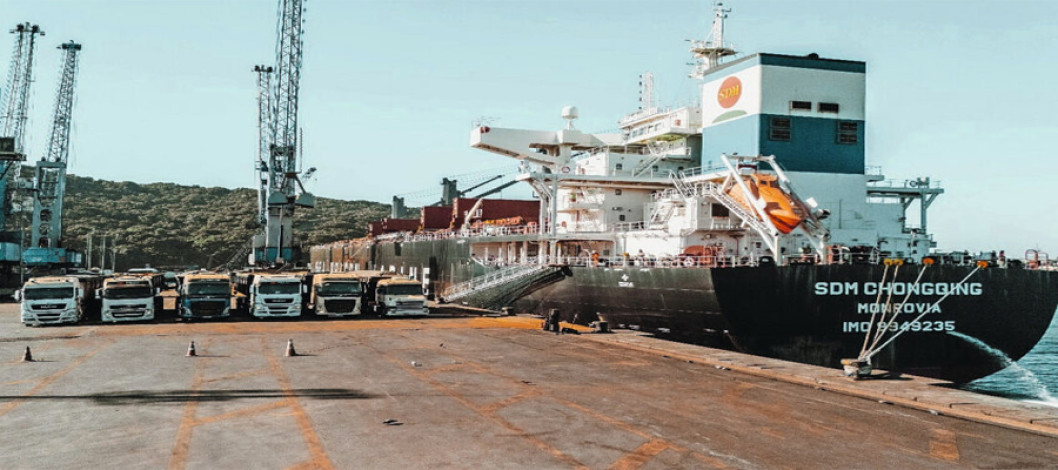
Port of Imbituba. Photo: Collected
Brazil has completed its first-ever DDG (Dried Distillers Grains) shipment to China, following a new sanitary protocol between the countries. This marks a significant development for Brazil’s corn ethanol by-products and animal feed exports. With China seeking to diversify suppliers beyond the United States, Brazil is poised for increased market share.
The cargo departed from the Port of Imbituba, in the state of Santa Catarina, in February, marking the effective opening of a new market for the Brazilian product.
The operation follows the formalisation of a sanitary protocol between the 2 countries, signed in May 2025, which established the technical conditions for exports.
Under this agreement, the Ministry of Agriculture and Livestock (Mapa), through the Secretariat of Agricultural Defence, led the approval process for industrial facilities interested in exporting.
“China is one of the most demanding markets in the world…”
Brazilian plants secure export approval
In total, 13 Brazilian plants were authorized to export after meeting Chinese requirements related to traceability, quality control, and good manufacturing practices.
The inaugural shipment was carried out by Inpasa, which obtained the first export approval in January 2026.
The company shipped a batch of 62,000 tones of DDGS (Dried Distillers Grains with Soluble), a version of the product that includes soluble and offers high nutritional value for animal feed.
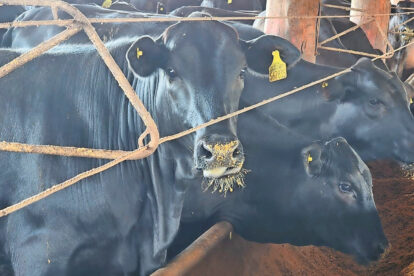
DDG and DDGS are widely used in feed formulations for various species, including cattle, poultry, and pigs.
With a protein content of around 32% and high digestibility, the product has been gaining ground in international trade as a strategic source of animal nutrition.
Surge in corn ethanol outputs
The Brazilian product’s arrival in China happens amid the expansion of Brazil’s corn ethanol production.
For the 2025/2026 season, output is projected to reach nearly 10 billion liters, thereby increasing the availability of co-products, including DDG, DDGS, and vegetable oil.
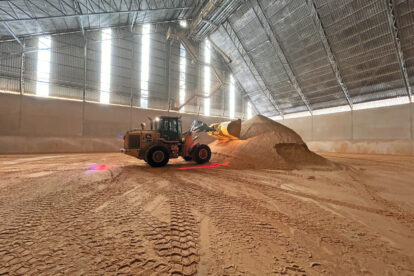
DDG storage in Inpasa
This growth has contributed to diversifying Brazil’s agricultural export portfolio, which has traditionally been concentrated in raw commodities.
Foreign trade data indicate steady growth in exports of the co-product.
In 2024, Brazil shipped around 791,000 tones of DDG.
In 2025, volumes reached 879,358 tones, distributed across 25 markets, according to data from the Ministry of Development, Industry, Trade and Services (MDIC).
Shifting trade patterns with China
According to the National Corn Ethanol Union (UNEM), China is emerging as a destination with strong potential to absorb part of this growth.
The Asian country imported more than US$ 66 million in animal feed-related products in 2024 and is seeking to diversify its suppliers.
Until now, the United States has accounted for more than 96% of DDG sales to the Chinese market.
Brazil’s entry increases competition and creates room for new trade flows.
Growing global ambitions
Inpasa projects that China could account for up to 50% of its DDGS exports in 2026.
The company has an annual production capacity of around 3.3 million tones of the co-product and operates industrial units in Brazil and Paraguay.
It also maintains international certifications and technical standards geared towards large-scale exports.
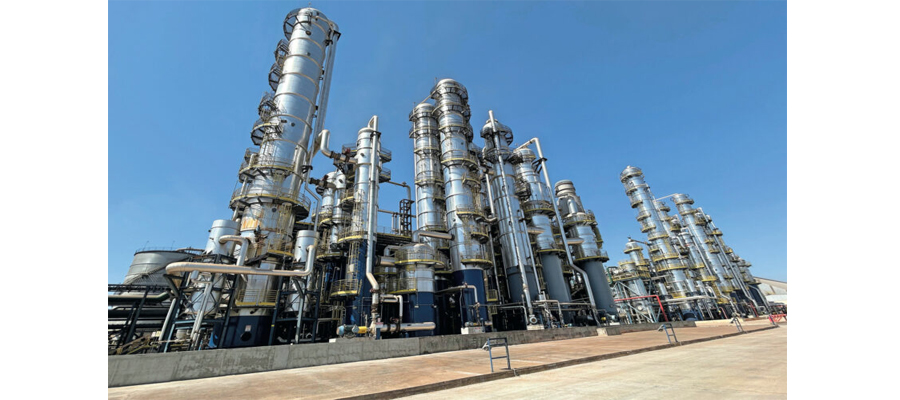
Inpasa facilities in Nova Mutum. Photo: Daniel Azevedo Duarte
‘Food + Fuel’ production model
The growth in exports is linked to the biorefinery model adopted by the corn ethanol industry.
In this system, renewable energy production is integrated with the generation of inputs for the animal protein chain.
The concept, known as Food + Fuel, enables the production of ethanol and food on the same agricultural land within the same production cycle, improving land-use efficiency.
Meeting China’s stringent standards
The opening of the Chinese market advanced after coordination between Brazilian government bodies and representatives abroad. The process involved Mapa, the Ministry of Foreign Affairs, the Agricultural Attaché’s Office in Beijing, and the Brazilian embassy in China, in coordination with the private sector.
“China is one of the most demanding markets in the world, and being present there demonstrates Inpasa’s ability to operate on a global scale, with consistent standards and full compliance with international requirements,” says Renato Zicardi, International Trading Director at Inpasa.
The approval of export plants required operational adjustments and compliance with specific technical protocols. Criteria included contaminant control, absence of undesirable residues, nutritional standardization, and full traceability of shipments. Meeting these requirements was essential for access to the Chinese market, considered one of the most stringent in sanitary terms.
“The authorization to export DDGS to the Chinese market reflects the trust built through a rigorous technical process, quality assurance, and traceability,” he concludes.
You can learn
about South Asia's largest exhibition on this topic through this link: https://feedtechbd.com/
Source: Online/GFMM













Comment Now