



Photo Collected
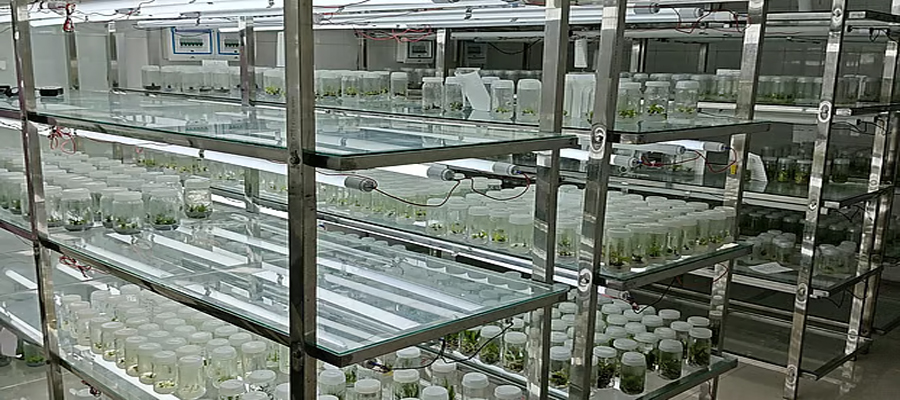
A small glass bottle. Inside is a small green plant. To the naked eye, it may seem like a simple laboratory test sample. However, after a few months, these tiny tissues transform into thousands of disease-free seedlings. With them, commercial cultivation of various flowers, fruits and ornamental plants begins.
This system of seedling production is called tissue culture technology, through which disease-free seedlings of various high-value fruits, flowers and ornamental plants, including banana, pineapple, strawberry, dragon fruit, orchid, lily, gerbera, stevia and papaya, are now being produced in the country. As a result, farmers are getting high-quality seedlings at a comparatively low price. According to agricultural experts, this has started a new chapter in the country's commercial agriculture and has opened the door to financial possibilities.
Professor Abu Noman Faruk Ahmed, Chairman of the Department of Plant Pathology of Sher-e-Bangla Agricultural University, told, "Tissue culture technology is being widely used in commercial agriculture all over the world. Bangladesh is also moving in that direction." The use of this technology should be further increased to develop modern agriculture and produce disease-free seedlings and increase productivity. Because, there is no alternative to producing millions of disease-free seedlings in a small area.’
Foreign varieties are available in the country
G-9 varieties of banana, MD-2 pineapple, strawberry, dragon, gerbera, lily, orchid, stevia and papaya seedlings are now being produced in the country. Earlier, these seedlings were imported from various countries including India and Thailand.
Madaripur Horticulture Center sold a maximum of more than 203,000 seedlings in the country in the 2025-26 fiscal year. This earned the government 52 lakh 33 thousand taka.
Ashutosh Kumar Biswas, head of Madaripur Horticulture Center, told, ‘If you only sell fruit seedlings, your income is limited. Therefore, we have also increased the production of flower and ornamental plant seedlings. The lily seedlings here are now going as far as Panchagarh.’
* The goal is to produce about one crore disease-free seedlings per year.
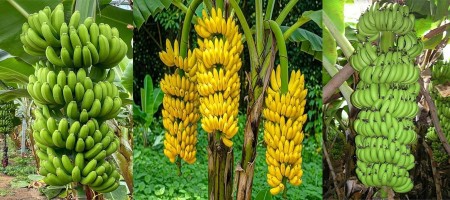
* Each G-9 banana cane produces 300-350 bananas.
* The government’s income from horticulture centers in the last fiscal year was Tk 7.5 crore.
Thousands of seedlings born in glass bottles
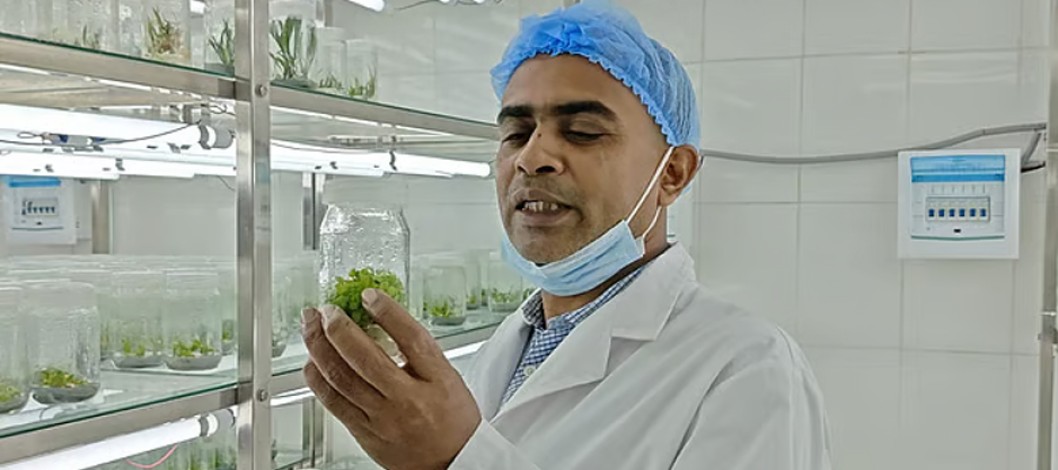
Recently, when visiting the tissue culture lab in Madaripur, it was seen that agricultural scientists wearing white aprons and masks are working in a sterile environment. Small plant tissues are stored in rows of glass bottles.
The agronomist in charge of the lab, Md. Enamul Islam, said that first, tissues are collected from the selected mother plant and kept in a sterile environment in a special nutrient medium. Then, thousands of seedlings are produced from a single tissue through cell division in several steps. Later, they are handed over to the farmers.
Fruits are coming in the field
Farmer Abdul Kader of Kalkini Upazila of Madaripur has planted a G-9 variety banana garden on one and a half bighas of land. Each branch of his garden bears 250-300 bananas. A local banana tree usually bears 130-160 bananas.
Farmer Abdul Kader said that the price of a G-9 variety sapling is 30 to 40 taka. Each branch is so big that it has to be tied to a bamboo pole and carried on the shoulder. Due to the good yield, many farmers in the vicinity are now interested in cultivating this variety of banana.
Meanwhile, entrepreneurs are also trying to make a commercial profit by planting seedlings produced using new technology. For example, Md. Rezwanul Islam has established an institution called 'Green One' in Shahjahanpur, Bogra. He has planted about 1500 gerbera trees. He has spent 42 thousand taka for this. Now he sells flowers worth 12 thousand to 15 thousand taka every week.
Rezwanul Islam said, now local seedlings are available for 35 taka. Earlier, it cost 60 taka to import from India.
Target to produce crore seedlings per year
Under the Department of Agricultural Extension's 'Tissue Culture Laboratory cum Horticulture Center Establishment and Development Project', three modern tissue culture labs are currently operational in Madaripur, Bogra and Mymensingh. In addition, work is underway to build new labs in eight districts of the country. The annual seedling production capacity of each lab is 10 to 12 lakh.
If all the labs are operational at full capacity, it will be possible to produce about one crore disease-free seedlings per year. In the last one year, 2 lakh 12 thousand seedlings have been produced in the three labs. Of this, about 1 lakh 93 thousand seedlings have been supplied to farmers and entrepreneurs. The highest demand is for G-9 banana, gerbera and strawberry seedlings.
Project director Talha Jubair Masrur said that the biggest advantage of this technology is the production of disease-free seedlings while maintaining the characteristics of the mother tree. This reduces dependence on foreign seedlings and reduces the cost of production for farmers.
Talha Jubair Masrur said that research and production of new varieties of seedlings are underway with various universities.
Madaripur tops in sales of seedlings
According to the Department of Agricultural Extension, there are a total of 76 horticulture centers in the country. The Madaripur center is at the top of these. The Chapainawabganj center is in second place in selling various varieties of mango seedlings. Pabna is in third place in selling kul seedlings. Dinajpur is in fourth place in selling litchi seedlings.
Barisal is in fifth place in selling various varieties of coconut and mango seedlings; and in the Dhaka region, the highest number of seedlings is sold in Gazipur Horticulture.
The government earned Tk 7.37 crore in revenue in the 2025-26 fiscal year from the sale of seedlings from the country's horticulture centers, up from Tk 7 crore in the previous fiscal year.
Source: Online/GFMM


















Comment Now