



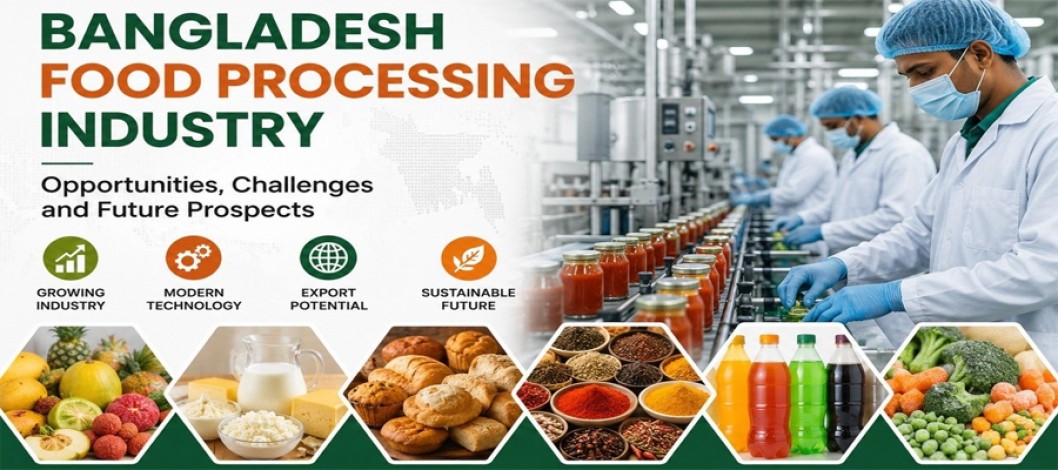

The agriculture and food sector is one of the most important contributors to the economy of Bangladesh. With a growing population, rapid urbanization, changing lifestyles, and increasing consumer demand for processed food products, the Food Processing Industry has become one of the fastest-growing industrial sectors in the country. The demand for food products manufactured in Bangladesh is increasing not only in the domestic market but also in international markets.
Today, hundreds of food processing companies in Bangladesh produce a wide range of products, including biscuits, noodles, spices, dairy products, beverages, bakery items, frozen foods, snacks, and processed fruits and vegetables. The industry is expanding rapidly due to the adoption of modern technologies, high-quality food ingredients, and international-standard manufacturing practices.
The Food Processing Industry is one of the largest manufacturing sectors in Bangladesh. A significant portion of the country’s agricultural production is now converted into value-added processed food products. The major segments of the industry include bakery and confectionery products, dairy products, edible oils, spices and seasonings, fruit and vegetable processing, frozen foods, beverages and juices, instant foods, snacks and convenience foods, as well as nutraceutical and health-focused products. Many leading manufacturers are exporting their products to Europe, the Middle East, North America, Asia, and Africa.
Several factors are driving the rapid growth of the Food Processing Industry in Bangladesh. As one of the world's most densely populated countries, Bangladesh has a continuously growing demand for food products. Urbanization and busy lifestyles have increased the demand for ready-to-eat and ready-to-cook foods. The expansion of the middle-income population has also boosted the demand for branded and packaged food products. Furthermore, the growth of supermarkets, online grocery platforms, and e-commerce businesses is creating new opportunities for food manufacturers and processors.
Bangladesh is currently a highly attractive destination for investment in the food processing sector. The country offers significant opportunities in fruit and vegetable processing due to the abundant production of mangoes, jackfruits, pineapples, lychees, guavas, bananas, and various vegetables. These agricultural products can be processed into juices, jams, jellies, purees, dehydrated products, and frozen foods. The dairy sector is also experiencing strong growth, creating opportunities for products such as milk powder, cheese, yogurt, butter, ice cream, and functional dairy products. Similarly, the bakery and confectionery market continues to expand, with increasing demand for biscuits, cakes, chocolates, wafers, and snack foods. The growing health-conscious consumer segment is also creating opportunities for low-sugar, high-protein, high-fiber, and organic food products.
Food ingredients play a crucial role in the success of any food processing operation. In Bangladesh, manufacturers widely use food flavors, natural colors, emulsifiers, stabilizers, preservatives, sweeteners, protein concentrates, vitamins, minerals, enzymes, and functional ingredients. The use of high-quality ingredients helps improve taste, product quality, nutritional value, and shelf life, enabling manufacturers to remain competitive in both local and international markets.
Like the global food manufacturing industry, Bangladesh is increasingly adopting automation and advanced technologies. Automated processing systems are improving production efficiency and reducing labor costs. Smart packaging technologies are enhancing food safety and extending shelf life. Modern quality control systems help manufacturers maintain international standards. Artificial Intelligence (AI) is being used for demand forecasting, production planning, and quality management, while Internet of Things (IoT) technologies allow real-time monitoring and management of production facilities.
Despite its rapid growth, the industry faces several challenges. One of the major issues is the fluctuation in raw material prices caused by seasonal agricultural production and market volatility. Another challenge is the limited availability of cold chain infrastructure, including cold storage facilities and refrigerated transportation for fruits, vegetables, meat, and dairy products. Many small and medium-sized enterprises still lack access to modern machinery and advanced processing technologies. Food safety and quality compliance are also critical concerns, especially for companies seeking to enter international markets where certifications such as HACCP, GMP, ISO 22000, and Halal Certification are increasingly important. In addition, the shortage of skilled food technologists, researchers, and trained operators remains a challenge for the industry. Dependence on imported food ingredients also increases production costs and creates supply chain risks.
Bangladesh has significant potential in food exports and is already supplying various food products to international markets. Major export products include frozen foods, spices, biscuits, noodles, snacks, bakery products, fruit-based products, beverages, and confectionery items. The rapidly growing global Halal food market presents a major opportunity for Bangladeshi manufacturers. Key export destinations include the Middle East, Malaysia, Indonesia, Europe, North America, and Africa, where demand for Bangladeshi food products continues to grow.
Sustainability has become an important priority in the global food industry. Food processing companies are increasingly adopting sustainable manufacturing practices such as the use of renewable energy, water recycling, food waste reduction, eco-friendly packaging, and carbon footprint reduction initiatives. Companies that implement sustainable production systems are gaining greater acceptance in international markets and strengthening their long-term competitiveness.
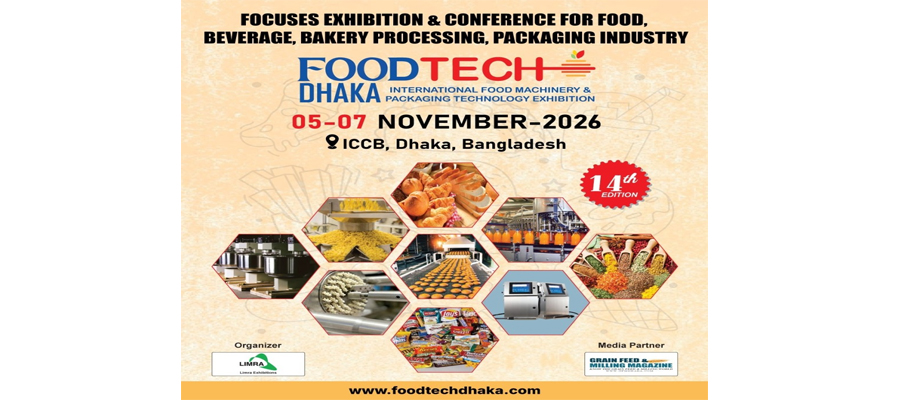 "14th Food Tech Dhaka Exhibition & Conference", 05-07, November 2026 at ICCB, Dhaka, Bangladesh.
International exhibitions and trade shows also play a vital role in the development of the food industry. These events provide opportunities for companies to discover new technologies, meet international suppliers, source advanced food ingredients, explore new markets, and build valuable business relationships. Industry events such as Food Ingredients Bangladesh, FoodTech Dhaka, and other international food exhibitions help connect the Bangladesh food industry with the global marketplace and create opportunities for business growth and innovation.
In conclusion, the Bangladesh Food Processing Industry is a dynamic and rapidly expanding sector with strong future prospects. Growing population, urbanization, technological advancement, increased use of modern food ingredients, and rising international demand are creating significant growth opportunities. However, addressing challenges related to food safety, modern technology adoption, skilled workforce development, and cold chain infrastructure will be essential for long-term success. With proper investment, strategic planning, and adherence to international standards, Bangladesh has the potential to become a leading food processing and food exporting nation in the coming decade. The industry is not only strengthening food security but also contributing significantly to employment generation, industrial development, and foreign exchange earnings for the country.
You can learn about South Asia's
largest exhibition on this topic through this link: https://www.foodingreexpo.com/
---
















Comment Now