




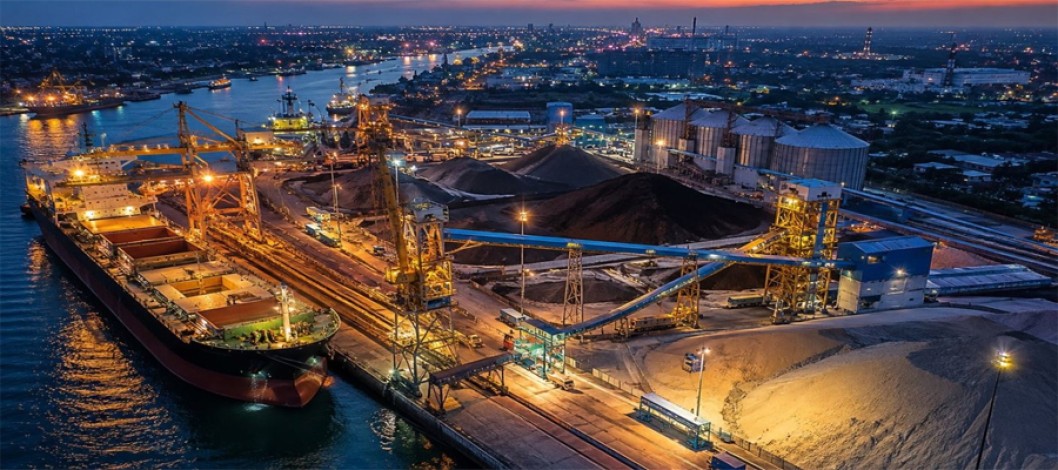

Bangladesh’s industrial sector is undergoing rapid transformation. The expansion of manufacturing, food processing, cement, animal feed, fertilizer, power, chemicals, logistics and infrastructure industries is creating increasing demand for efficient systems to transport, store and process bulk materials.
Bulk Material Handling has therefore become an essential part of modern industrial operations. From cement and clinker to grain, fertilizer, coal, minerals, chemicals and food ingredients, industries need reliable systems to move large quantities of materials safely, efficiently and economically. Modern bulk material handling technologies—including belt conveyors, screw conveyors, bucket elevators, pneumatic conveying systems, silos, hoppers, feeders, dust collection systems, weighing systems and industrial automation—are becoming increasingly important for improving productivity and reducing operating costs.
For Bangladesh, the development of efficient bulk handling infrastructure can play an important role in supporting industrial growth, supply-chain efficiency and long-term manufacturing competitiveness.
Bulk Material Handling refers to the complete process of receiving, transporting, storing, feeding, processing and dispatching large quantities of loose or granular materials. Unlike packaged goods, bulk materials are usually handled without individual containers. They may be in the form of:
A typical bulk material handling system can begin at a receiving point and transport materials through conveyors or other equipment to a storage facility, production line or dispatch area. Depending on the industry, the system may also include crushing, screening, weighing, feeding, mixing, packaging and automated control systems.
Bangladesh has a growing manufacturing and processing economy. As production capacity increases, factories need to handle larger quantities of raw materials within shorter periods. Traditional manual handling can result in higher labour requirements, material losses, production delays and safety risks.
Modern bulk material handling systems can provide several important benefits.
Conveyor systems and automated equipment allow materials to move continuously between different sections of a facility.
Mechanical handling can reduce the amount of manual labour required for moving heavy or large quantities of materials.
Properly designed conveyors, transfer points, hoppers and storage systems can reduce spillage and material loss.
Continuous material flow helps factories maintain stable production and reduce unnecessary downtime.
Mechanized systems reduce the need for workers to manually move heavy materials, potentially improving workplace safety.
Modern silos, weighing systems and monitoring technologies allow businesses to manage raw material storage and consumption more accurately.
Bulk material handling is relevant to a wide range of industries in Bangladesh.
The cement sector is one of the major users of bulk material handling technology. Cement plants need to transport and store large quantities of clinker, limestone, gypsum, fly ash, slag and other raw materials.
Typical equipment includes:
An efficient material handling system can help cement manufacturers improve production efficiency and material flow.

Bangladesh has a large agriculture and food-processing ecosystem, making grain and feed handling another important application. Rice, wheat, corn, soybean meal, bran and other feed ingredients often need to be received, transported, stored and processed in bulk.
Modern grain and feed facilities may use:
Automated handling systems can help feed mills and grain-processing facilities improve throughput and operational efficiency.
Fertilizer and chemical products often require specialized material handling systems. Products such as urea, DAP, TSP and other granular fertilizers can be transported through conveyors, hoppers, feeders and storage systems. Chemical materials may require additional considerations such as corrosion resistance, enclosed conveying and contamination control. Safety and accurate dosing are particularly important in this sector.
Power plants that use coal, biomass or other solid fuels require reliable systems for receiving, transporting and feeding fuel.
A typical fuel handling system may include:
Reliable fuel handling is essential for maintaining continuous power generation operations.
The food-processing sector uses many bulk ingredients, including flour, sugar, starch, grains, salt and powdered ingredients. Food-grade material handling systems must place particular emphasis on:
Screw conveyors, pneumatic conveying systems, food-grade belt conveyors and automated feeding systems can support efficient food production.
Ports and logistics facilities are another important application for bulk material handling. Bangladesh's Chattogram Port is a major gateway for international trade. In 2025, the port handled approximately 138.15 million metric tonnes of cargo and 3.409 million TEUs of containers. (BSS) This scale of cargo movement demonstrates the importance of efficient cargo handling, transportation, storage and logistics infrastructure. As Bangladesh's trade and industrial activity continues to expand, efficient bulk handling systems may become increasingly important for ports, terminals, industrial warehouses and distribution facilities.
Bulk material handling is no longer limited to traditional conveyor systems. Modern facilities increasingly integrate automation, sensors, monitoring systems and data-driven controls.
Belt conveyors are among the most widely used technologies for bulk material transportation. They can transport materials continuously over short or long distances and are widely applicable to industries such as:
The design of a belt conveyor depends on material characteristics, capacity, conveying distance, elevation and operating conditions.
Screw conveyors use a rotating screw mechanism to move bulk materials. They are commonly used for:
They can also be used where controlled feeding or enclosed material transportation is required.
Bucket elevators are designed for vertical transportation of bulk materials. They are particularly useful in:
They can move material from a lower level to elevated storage or processing areas.
Pneumatic conveying systems transport powdered or fine materials through pipelines using air pressure or vacuum. This technology can be useful when an enclosed and controlled conveying process is required. Applications include:
Pneumatic conveying can also reduce direct exposure of materials to the surrounding environment.
Storage is a critical component of bulk material handling. Modern silo systems can include:
Proper silo design can improve material storage efficiency while supporting better inventory control. For Bangladesh, silo technology has particular relevance to grain, feed, cement, fertilizer and food-processing industries.
Dust generation is a significant concern in industries handling cement, coal, flour, minerals and powdered materials. Dust can affect workplace conditions, equipment maintenance, material recovery and environmental performance. Modern bulk handling facilities may therefore use:
Effective dust management should be considered during the initial design of a material handling system rather than treated as an afterthought.
Industrial automation is becoming increasingly important in modern manufacturing. Bulk material handling systems can integrate technologies such as:
These technologies can provide operators with better visibility into equipment performance and material flow. Predictive maintenance can also help identify potential equipment problems before they result in major production interruptions.
The future of bulk material handling in Bangladesh is closely connected with industrial automation, infrastructure development and manufacturing expansion. Several trends are expected to influence the sector.
As manufacturers seek greater productivity and lower labour dependency, automated conveyor systems are likely to receive increasing attention.
Modern storage facilities are increasingly moving toward sensor-based monitoring, automated filling and discharge, and real-time inventory management.
Environmental management and worker safety are increasing priorities. Enclosed conveying, dust extraction and suppression technologies can therefore become more important.
Growing cargo volumes may create additional demand for efficient loading, unloading, storage and material transfer systems.
Energy efficiency is becoming an important consideration when selecting industrial equipment. High-efficiency motors, variable-frequency drives and optimized conveyor designs can help reduce unnecessary energy consumption.
Selecting a bulk material handling system requires more than comparing equipment prices. Businesses should evaluate several factors.
Consider:
Determine the required material flow rate, such as tonnes per hour.
Consider both horizontal distance and vertical elevation.
The equipment should fit the existing or planned factory layout and production flow.
Motor efficiency, conveyor design and operating conditions can significantly influence long-term energy costs.
Availability of spare parts, technical support, maintenance requirements and equipment reliability should be evaluated.
Dust, fire, explosion, moving machinery and worker safety requirements should be considered during system design.
Businesses should determine whether they need a manual, semi-automatic or fully automated system.
A properly engineered system can provide long-term benefits beyond the initial equipment investment by reducing operating costs, material losses and production interruptions.
The expansion of Bangladesh's industrial economy creates opportunities not only for equipment manufacturers but also for technology suppliers, system integrators, distributors and service providers.
Potential areas of opportunity include:
International manufacturers and technology companies can also explore Bangladesh as a potential market for industrial equipment and automation solutions.
As Bangladesh's industrial sector develops, specialized exhibitions can provide an important platform for technology exchange and business networking.
Bulk Handling Expo Bangladesh is positioned to connect manufacturers, technology providers, distributors, importers, engineers, procurement professionals and industrial buyers involved in bulk material handling and related technologies.
The exhibition can provide opportunities to explore solutions related to:
For industries such as cement, grain, animal feed, food processing, fertilizer, chemicals, power, logistics, ports and manufacturing, such platforms can help decision-makers discover new technologies and establish business relationships.
The exhibition can also create opportunities for international suppliers seeking distributors, agents, buyers and industrial partners in Bangladesh.
Bulk material handling is becoming an increasingly important component of Bangladesh's industrial infrastructure. As manufacturing capacity, cargo movement, food processing, cement production, animal feed production, fertilizer distribution and industrial logistics continue to develop, the need for efficient, safe and automated material handling systems is expected to increase.
Technologies such as belt conveyors, screw conveyors, bucket elevators, pneumatic conveying systems, silos, hoppers, feeders, dust collection systems, automated weighing and smart control systems can help industries improve productivity, reduce material losses and create more efficient production environments. The future of bulk material handling in Bangladesh will likely be shaped by automation, energy efficiency, safety, digital monitoring and integrated industrial systems.
For equipment manufacturers, technology providers, distributors, importers, investors and industrial buyers, this evolving market presents significant opportunities. Bulk Handling Expo Bangladesh can serve as an important meeting point for the industry's stakeholders, bringing together technologies, suppliers, buyers and decision-makers under one platform.
As Bangladesh moves toward increasingly automated and efficient industrial operations, modern bulk material handling technology will play an important role in supporting the country's next phase of industrial growth.














Comment Now