




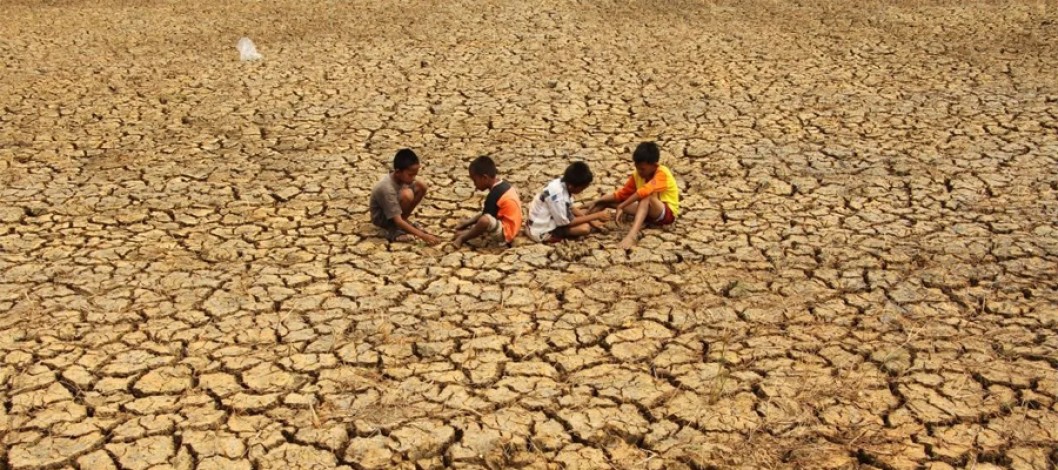
Indonesia’s Meteorology, Climatology, and Geophysics Agency (BMKG) has projected that an El Niño climate phenomenon will persist into early 2027, bringing extended drought conditions and heightened fire risks across Java, Sumatra, Kalimantan, and other major regions across the archipelago.
BMKG's latest monitoring shows dry conditions have spread across 54.5 percent of the country’s seasonal zones. Teuku Faisal Fathani, Head of the Meteorology, Climatology, and Geophysics Agency (BMKG), warned during a press briefing in Jakarta, Thursday (July 30), that the drought was expected to peak between August and September, with the potential for further intensification if a positive Indian Ocean Dipole—a climate phenomenon characterized by fluctuating sea surface temperatures in the Indian Ocean—develops later this year.
When combined with El Niño, a positive Indian Ocean Dipole typically suppresses rainfall further, exacerbating drought conditions across equatorial Southeast Asia. Hotspot observations indicate that wildfire risks have accumulated faster through mid-2026 than during previous major El Niño cycles in 2015, 2019, and 2023.
West Kalimantan, South Papua, and Riau currently report the highest concentrations of hotspots, with localized haze already being detected in parts of West Kalimantan. These early indicators highlight the heightened vulnerability of Indonesia's vast peatlands, which retain massive amounts of carbon and become highly flammable when drained or dried during prolonged dry spells.
The rate at which environmental conditions are deteriorating has caught the attention of authorities. Following high-level emergency cabinet meetings chaired by President Prabowo Subianto earlier this week, the government has ordered an integrated response involving cloud-seeding aircraft, military assets, and emergency water infrastructure.
Led by BMKG in coordination with the military, the National Disaster Management Agency (BNPB), and environmental ministries, these cloud-seeding operations use military aircraft to apply sodium chloride to promising cloud formations. Rather than creating rain artificially out of thin air, these specialized flights target existing cloud formations to trigger torrential downpours, saturating vulnerable peat soils in Riau and Central Kalimantan before major fires can develop.
Similar weather modification activities target key water catchment basins, such as Lake Toba in North Sumatra, Lake Poso in Central Sulawesi, and the Citarum River basin in West Java, to help maintain reservoir levels. Coordinating Minister for Infrastructure Agus Harimurti Yudhoyono said the government is working to ensure adequate water supplies in reservoirs and dams.
He emphasized that the main priority is maintaining sufficient water levels to guarantee clean water access for the public while supporting agricultural irrigation to keep farm productivity intact.
Energy grid and water resource management
The prolonged dry season poses a double-edged sword for the nation's energy infrastructure. Extreme summer heat naturally drives power demand as households and businesses max out air conditioning usage.
Simultaneously, declining water levels in key reservoirs threaten to undercut output from hydroelectric dams, which form a crucial pillar of the national clean energy mix. Therefore, meteorologists have advised the Ministry of Energy and Mineral Resources, state utility PLN, and dam operators to adjust water allocation schedules at hydroelectric power plants.
Officials emphasized that adjusting turbine operations according to real-time climate data is essential to balance electricity generation with water conservation through the peak dry period. These cross-sectoral measures align with ongoing government strategies to transition toward preventive disaster management.
By integrating meteorological early warnings with inter-agency operational planning, authorities seek to reduce the environmental, economic, and social impacts associated with major climate events.
Public health advisories
Meanwhile, reduced cloud cover has allowed daily maximum temperatures to reach between 30°C and 34°C in several regions, including parts of Lampung, Kualanamu, Semarang, Banyuwangi, Sentani, and Gorontalo, prompting BMKG to issue public health advisories.
Potential health risks include heatstroke, dehydration, and acute respiratory infections linked to airborne dust and fire haze. The BMKG recommends that outdoor workers stay hydrated, wear protective clothing and sunglasses, and apply sunscreen to reduce exposure to ultraviolet radiation.
Local health departments have also been advised to prepare facilities for a potential uptick in respiratory illnesses in areas affected by smoke haze. With climate models forecasting active El Niño conditions into early next year, the performance of these preventive operations will remain a primary focus for regional authorities.
Shielding the rice bowls
In the coming months, the government will assess the resilience of Indonesia's water management systems, fire suppression operations, and agricultural supply buffers during an extended period of dry weather. Memory of the severe El Niño that forced Indonesia to increase rice imports in previous years remains fresh in the minds of policymakers.
To prevent a repeat of food price spikes, the Ministry of Agriculture has rolled out a preventive infrastructure defense months ahead of the dry season's peak. The measures include distributing 100,000 water pumps, rehabilitating 900,000 hectares of irrigation networks, and deploying drought-resistant seed varieties.
The ministry is also utilizing around 800,000 hectares of swampland that retain moisture as surface water levels drop. According to agricultural officials, national government-managed rice reserves stood at 5.24 million metric tons as of late July 2026, supplemented by standing crops estimated at 10 million to 11 million tons.
While localized crop losses may occur in drought-prone districts, officials believe that current reserves will be sufficient to maintain national food supplies.
Source: Online/GFMM























Comment Now