




Photo: Collected
The Ministry of Agriculture is adopting a 25-year master plan to ensure the production, commercial potential, and food security of the agricultural sector. It has a long-term impact on the demand and supply of the agricultural sector. The implementation of this master plan will require government investment of about 21 lakh crore taka by 2050.
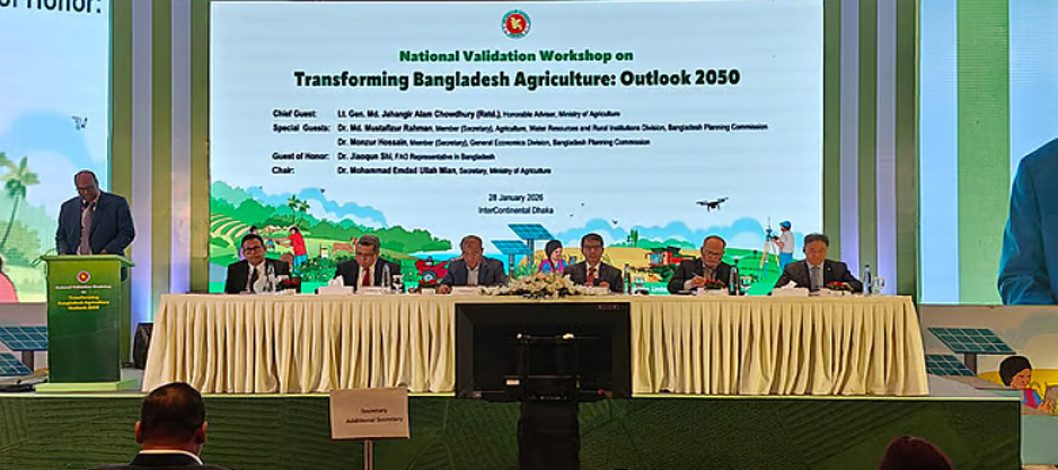
This information was presented at a national seminar titled 'Transforming Bangladesh Agriculture: Outlook 2050' at the Intercontinental Hotel in the capital on Wednesday (Jan 28, 2026). The seminar, chaired by Agriculture Secretary Muhammad Emdad Ullah Mian, was chaired by Agriculture Ministry Advisor Md. Jahangir Alam Chowdhury. The guest of honor was the Dhaka representative of the Food and Agriculture Organization of the United Nations, Ziakun Shi. The special guests were the members (secretaries) of the General Economics Department of the Planning Commission, Manjur Hossain and Md. Mustafizur Rahman.
Presenting the draft plan, Additional Secretary of the Ministry of Agriculture, Md. Mahmudur Rahman said that short, medium, and long-term investment plans have been adopted for the development of the agricultural sector. An investment of about 3 lakh 22 thousand crore taka will be required in the initial stage in 25 years. And about 17 lakh 97 thousand crore taka will be required in the second stage. In total, an investment of about 21 lakh crore taka will be required, which will come from the development allocation.
For the expansion of seeds, fertilizers, irrigation, pesticides, and smart technology in agriculture, the seminar informed that these funds will be spent. The plan has been made keeping in mind 35 sub-sectors of 13 thematic sectors. Through which it has been planned to improve nutritional security, climate resilience, value addition in agriculture, agricultural technology, agricultural education and skill development, and agricultural market management.
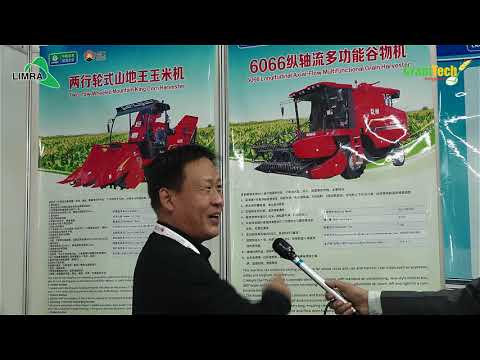
Regarding the mechanization of the agricultural sector, it was said in the seminar that a market of about 15,500 crore taka for agricultural machinery has been created in the country, of which 72 percent is import-dependent. Now the production of necessary machinery for this sector has started in the country.
It was further informed in the seminar that about 238 new seed varieties will be required to combat the effects of climate change. In addition, the master plan highlights the need for 245 local pesticides and 123 technologies for 35 crops. Regarding the irrigation system of the agricultural sector, it was said that 72 percent of groundwater is still used in this sector. The use of surface water should be increased with the help of technology instead of groundwater. And as the dependence on imports of fertilizers is increasing, foreign exchange reserves are under pressure. Therefore, attention should be paid to the local production of fertilizers.
In the speech of the chief guest at the seminar, Agriculture Advisor, Md. Jahangir Alam Chowdhury said, if the farmers do not improve, the country will not improve. The interest of the big ones is waived, but the farmers do not get incentives. It will not be done by importing; we will have to increase our own production.
Manjur Hossain, a member of the General Economics Department, said, "Commercial agriculture and contract farming will increase in the future. As a result, whether small farms will remain or not is a big question. We still have weaknesses in determining the demand for agricultural products."
In the speech of the president, Agriculture Secretary Muhammad Emdad Ullah Mian said, this master plan will serve as a policy guideline for the agricultural sector. It will be finalized based on the opinions of all stakeholders from all over the country.
Agriculturists, agricultural scientists, agricultural economists, development partners, entrepreneurs in the agricultural sector, and representatives of the farming community were present at the seminar.
Source: Online/GFMM














Comment Now