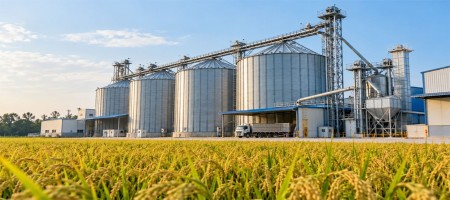




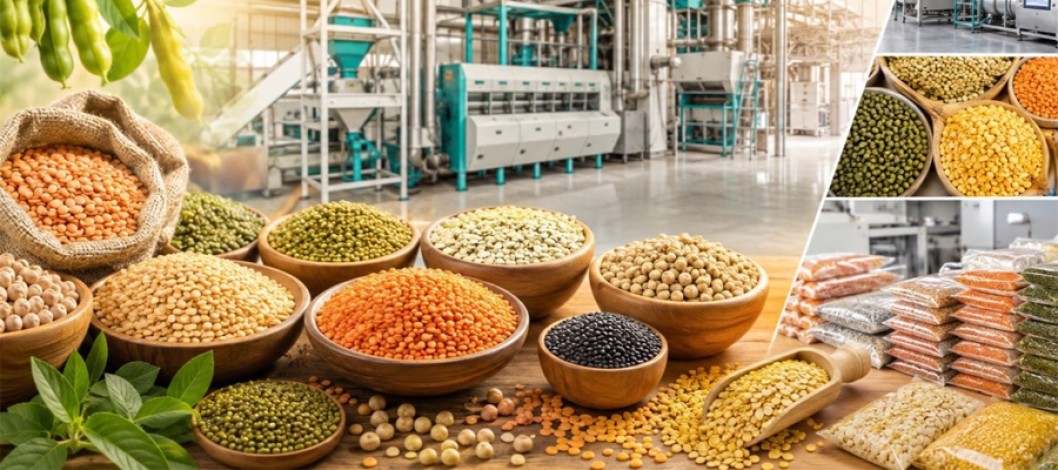

Bangladesh has a strong and growing agro-processing sector, and dal milling and pulses processing represent an important part of this industry. Pulses such as lentils, mung beans, chickpeas and peas are widely consumed across the country, creating consistent demand for efficient processing and high-quality finished products.
As Bangladesh’s food-processing, modern retail, packaged-food and branded-food markets continue to develop, opportunities are emerging for processors to produce cleaner, better-graded, hygienically processed and professionally packaged pulses.
This transformation is creating new opportunities for both existing dal millers and new investors to adopt modern pulses milling technology.
A modern Dal Milling Plant is no longer simply a machine for dehusking and splitting pulses. It is an integrated processing system incorporating cleaning, destoning, grading, conditioning, dehusking, splitting, separation, optical sorting, polishing, quality control and packaging.
For Bangladesh’s millers, entrepreneurs, investors and technology suppliers, understanding these technologies is becoming increasingly important for building efficient and competitive processing operations.
Why Modern Dal Milling Technology Matters
Traditional milling operations can often be improved through better process control, improved material handling, advanced cleaning and more accurate separation technologies.
A properly designed modern pulses processing line can help processors:
*Improve raw-material cleaning efficiency
*Remove stones and heavy impurities
*Grade pulses according to size
*Improve dehusking performance
*Maintain more consistent splitting
*Remove defective grains and unwanted materials
*Improve finished-product uniformity
*Reduce avoidable processing losses
*Improve packaging accuracy
*Reduce manual handling
*Improve production monitoring
The objective of modern milling technology is therefore not simply to increase production volume. It is to achieve better quality, higher efficiency, improved consistency and greater value addition.
Modern Dal Milling Process
The exact process configuration depends on the type of pulse, raw-material characteristics, plant capacity and finished-product requirements.
A typical modern process flow is:
Raw Pulses → Pre-Cleaning → Fine Cleaning → Destoning → Grading → Conditioning → Dehusking → Splitting → Separation → Sorting → Polishing → Final Grading → Packaging
Each stage performs a specific technical function.
1. Pre-Cleaning
Raw pulses entering the processing plant may contain straw, dust, soil, husk and other large foreign materials.
The pre-cleaning stage removes these materials before the product enters the main processing section.
Typical equipment may include:
*Pre-cleaners
*Vibratory cleaners
*Screens
*Aspirators
Effective pre-cleaning reduces unnecessary loading on downstream equipment and helps maintain stable processing performance.
2. Fine Cleaning
Fine cleaning removes smaller impurities and unwanted particles that remain after preliminary cleaning.
Depending on the plant design, processors may use vibratory cleaning systems, aspiration systems and screening equipment.
A well-designed cleaning section is fundamental to finished-product cleanliness and overall processing quality.
3. Destoning
Destoning technology is used to remove stones and other heavy particles from pulses.
Destoners generally use differences in density combined with controlled airflow and mechanical movement to separate heavy materials from the product stream.
Destoning is important not only for final product quality but also for protecting downstream processing equipment.
4. Grading
Grading separates pulses according to size.
Uniformly sized raw material can contribute to more consistent dehusking and splitting performance.
Modern grading systems can therefore help improve:
*Processing consistency
*Product uniformity
*Machine performance
*Overall process control
The appropriate grading system depends on the pulse variety and required product specification.
5. Conditioning
Certain pulses may require conditioning before dehusking and splitting.
Moisture level and conditioning time can influence the performance of subsequent processing stages.
Incorrect conditioning can affect dehusking efficiency, splitting quality and overall recovery.
Therefore, pulse-specific process parameters should be established based on raw-material characteristics and plant trials.
6. Dehusking
Dehusking is one of the most important stages in pulses milling.
During this process, the outer husk or seed coat is removed from the pulse.
Technology may include:
*Pulse dehuskers
*Emery roller systems
*Abrasive dehusking systems
Machine settings, feed rate, raw-material condition and pulse size can all influence dehusking performance.
7. Splitting
After dehusking, whole pulses are split according to the required product specification.
An efficient splitting system should aim to achieve the desired split percentage while minimizing unnecessary breakage.
Important operating parameters may include:
*Feed rate
*Roller or gap setting
*Pulse condition
*Size uniformity
*Machine calibration
Proper control at this stage can contribute significantly to finished-product recovery and quality.
8. Separation
Following splitting, whole pulses, split pulses, husk and other fractions need to be separated.
Mechanical separation and aspiration systems can be integrated into the process to handle different fractions.
An efficient separation system helps processors improve product recovery and maintain consistent output quality.
Optical Colour Sorting Technology
Optical colour sorting is an increasingly valuable technology for modern pulses processing.
Colour sorters use cameras, optical sensors and high-speed air-ejection systems to identify and remove selected defective grains, colour variations and unwanted materials.
For premium and branded pulses, colour sorting can help improve:
*Product appearance
*Colour uniformity
*Finished-product consistency
*Removal of selected defects
*Overall market presentation
As Bangladesh’s packaged and branded pulses market develops, advanced sorting technology can provide additional opportunities for processors seeking higher product standards.
Polishing Technology
Depending on market requirements, pulses may undergo polishing after milling and separation.
The appropriate polishing technology should be selected according to the intended product specification, food-safety requirements and target market.
Process control is important to achieve the desired finish while maintaining product quality.
Final Grading and Quality Control
After processing, final grading can be used to classify the finished product according to size and quality.
A modern dal milling operation may monitor:
*Moisture
*Foreign-material content
*Size distribution
*Broken percentage
*Colour
*Cleanliness
*Packaging weight accuracy
Quality control should begin at the raw-material receiving stage, rather than only at the end of production.
Consistent raw-material inspection, process monitoring and finished-product testing are essential for building a reliable pulses-processing operation.
Key Machinery for a Modern Dal Milling Plant
The equipment configuration depends on plant capacity, product requirements and the desired level of automation.
A typical plant may include:
Cleaning Section
*Pre-cleaner
*Vibro cleaner
*Aspirator
*Magnetic separator
Preparation Section
*Destoner
*Grader
*Conditioning system
Milling Section
*Dehusker
*Emery roller
*Dal splitter
*Husk separator
Separation and Quality Section
*Gravity separator
*Optical colour sorter
*Final grader
Material Handling
*Bucket elevators
*Screw conveyors
*Belt conveyors
*Pneumatic conveying systems
Packaging Section
*Automatic weighing systems
*Filling machines
*Sealing machines
*Bagging systems
*Labelling systems
For commercial plants, equipment should be evaluated as an integrated processing line, rather than as a collection of individual machines.
Capacity balance, material flow, energy consumption, maintenance, automation and future expansion should all be considered during plant design.
Technology Upgrading Opportunities for Existing Millers
Modernisation does not always mean constructing an entirely new factory.
Existing dal millers can identify specific production bottlenecks and introduce targeted technology upgrades.
For example:
Poor Cleaning → Advanced Cleaning System
Stone Contamination → Improved Destoning
Uneven Particle Size → Modern Grading
Colour Variation → Optical Colour Sorting
High Manual Handling → Automated Material Handling
Packaging Limitations → Automatic Weighing & Packaging
This step-by-step approach can allow established mills to modernize their operations according to their business priorities and investment capacity.
Energy Efficiency and Process Optimization
Energy efficiency is an important consideration when designing or upgrading a modern dal milling plant.
Potential approaches include:
*High-efficiency motors
*Correctly sized equipment
*Efficient conveying systems
*Variable Frequency Drives where appropriate
*Preventive maintenance
*Optimized airflow systems
Energy efficiency can contribute to lower operating costs and improve the long-term competitiveness of a processing plant.
Dust Control and Working Environment
Pulses processing can generate dust, making appropriate dust collection and aspiration systems an important part of modern plant design.
An effective dust-control system can help:
*Improve the working environment
*Reduce product contamination risks
*Keep machinery cleaner
*Improve housekeeping
*Support more efficient maintenance
Dust-management requirements should ideally be considered during the initial plant design rather than added later.
Why Grain Tech Bangladesh Matters for Dal Millers
For Bangladesh’s dal millers, learning about new technology and communicating directly with machinery manufacturers and technology providers can support better investment decisions.
Grain Tech Bangladesh provides an industry-focused platform connecting the milling, grain, food-processing and related technology sectors.
According to its official information, the exhibition focuses on technological upgrading and value addition across rice, wheat, pulses, oilseeds, spices, dairy & feed and other food sectors.
For the pulses sector, the technology scope includes areas such as cleaning, grading, milling, sorting, processing and packaging.
This creates an opportunity for millers to explore different technologies and discuss their specific technical requirements directly with suppliers.
Why Grain Tech Bangladesh Is Valuable for Technology Suppliers
The Bangladesh market also offers opportunities for machinery manufacturers and technology companies serving the milling and food-processing industries.
For international and local suppliers, an industry exhibition can provide direct access to potential customers and decision-makers.
Relevant technology categories include:
*Dal milling machinery
*Cleaning equipment
*Destoners
*Graders
*Dehuskers
*Pulse splitters
*Colour sorters
*Conveying systems
*Packaging machinery
*Automation solutions
*Dust collection systems
*Quality-control equipment
Direct communication with millers can help suppliers understand actual production challenges, develop market relationships and identify potential business opportunities.
Grain Tech Bangladesh 2026: A Key Industry Opportunity
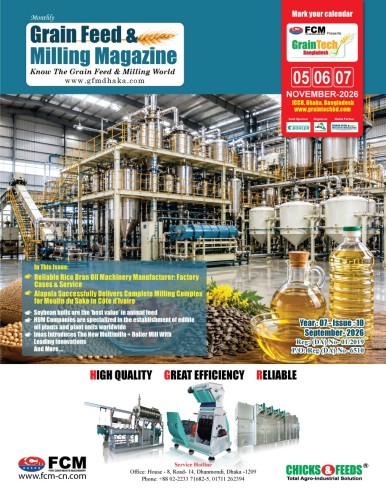
The 14th Grain Tech Bangladesh Exhibition & Conference 2026 will be held on:
Date: 5–7 November 2026 Venue: International Convention City Bashundhara (ICCB) Location: Dhaka, Bangladesh
The 2026 exhibition focuses on technological upgrading and value addition across rice, wheat, pulses, oilseeds, spices, dairy & feed and food-processing industries.
For dal millers and pulses-processing professionals, the event provides an opportunity to explore technologies covering cleaning, grading, milling, sorting, processing, packaging and related post-harvest solutions.
What Can Millers Gain from Grain Tech Bangladesh 2026?
For a miller planning a new plant or upgrading an existing facility, the exhibition can provide a practical environment to discuss real production requirements with technology providers.
For example, millers can explore questions such as:
*How can cleaning efficiency be improved?
*How can product recovery be optimized?
*How can broken percentage be controlled?
*Can optical sorting improve finished-product quality?
*How can manual handling be reduced?
*Which packaging system is appropriate for a particular product?
*What level of automation is suitable for a specific plant capacity?
*What technical support and after-sales service are available?
Direct technical discussions can help millers better understand available solutions before making major technology investments.
Knowledge Sharing and Future Milling Technology
Modern milling is not only about machinery. Technical knowledge, process optimization and industry networking are equally important.
Grain Tech Bangladesh provides an opportunity for industry professionals to exchange knowledge and learn about developments in milling, processing, automation, storage, sorting and related technologies.
Its conference programme also addresses Future Milling Technology, bringing together stakeholders from milling and food-processing industries.
Such knowledge-sharing opportunities can help millers, plant managers, engineers and entrepreneurs better understand the direction of the industry and prepare their businesses for future technology requirements.
Opportunities for New Investors and Entrepreneurs
Entrepreneurs planning to establish a new Dal Mill or Pulses Processing Plant should consider several factors before investing:
1.Market demand
2.Target pulse varieties
3.Plant capacity
4.Raw-material sourcing
5.Processing technology
6.Machinery configuration
7.Utility requirements
8.Quality-control systems
9.Packaging strategy
10.Working-capital requirements
11.Future expansion possibilities
12.Technical support and maintenance
Industry exhibitions can be useful during this planning process because entrepreneurs can compare technologies and communicate directly with machinery suppliers.
The Future of Dal Milling in Bangladesh
The future of pulses milling is likely to involve greater automation, improved sorting, digital monitoring, efficient material handling and modern packaging.
Potential technology developments include:
*Automated process control
*Optical sorting
*Digital weighing
*Online quality monitoring
*Energy monitoring
*Automated packaging
*Advanced dust collection
*Smart material handling
*Production-data analysis
*Remote equipment monitoring
The future objective is not simply to process more pulses.
It is to achieve:
Higher Efficiency + Better Quality + Lower Waste + Food Safety + Greater Value Addition
Conclusion
Bangladesh’s Dal Milling and Pulses Processing Industry has strong potential for modernization through better technology, efficient plant design and value-added processing.
Cleaning, destoning, grading, conditioning, dehusking, splitting, separation, optical sorting, polishing and packaging technologies can each contribute to improving the overall performance of a modern pulses processing plant.
For existing millers, targeted technology upgrades can provide practical opportunities to improve efficiency and product quality. For new investors, integrated plant design can provide a foundation for future growth.
For technology manufacturers and suppliers, Bangladesh provides opportunities to connect with millers, investors, entrepreneurs and food processors seeking modern processing solutions.
In this evolving ecosystem, Grain Tech Bangladesh 2026 can serve as an important meeting point between the milling industry and global and local technology providers.
Taking place on 5–7 November 2026 at ICCB, Dhaka, Bangladesh, the 14th Grain Tech Bangladesh Exhibition & Conference will provide an opportunity for millers, technology suppliers, investors, entrepreneurs and industry professionals to discover modern technologies, exchange technical knowledge and build valuable business connections.
The future of Dal Milling is not simply about processing more pulses. It is about processing smarter, improving quality, increasing efficiency, adding value and building stronger connections between millers and technology providers.
Grain Tech Bangladesh 2026
Connecting Millers, Technology Suppliers, Investors and the Future of Milling Technology.
---















Comment Now