





Wheat is dominating the headlines in commodity markets this week, driven by a combination of geopolitical tensions on export routes and mixed signals from the supply sector.
Wheat prices have hit their highest levels in several years, propelled by Black Sea export disruptions. A wave of cross-border attacks has almost completely halted grain loadings at Russian and Ukrainian ports, rekindling fears over global supply. The CBOT benchmark December contract touched $7.19 a bushel, its highest in a month, with opening indications up 9 to 12 cents. The move spilled into corn, where the most active contract rose 0.8% to $5.27 a bushel, as downward revisions to US yield forecasts added to the upward pressure.
On the European supply side, EU export figures point to a structural pullback that is making the market more sensitive to logistical shocks. European Union soft wheat exports for the 2026/2027 season stood at 2.38m tons as of August 23, down 33% year over year. Romania is the season's top exporter with 1.05m tons, ahead of Lithuania and Poland. This loss of European competitiveness leaves the global market more exposed to tensions along Black Sea corridors.
The quality of the French crop, however, offers a reassuring signal, even though it is not enough to offset worries about volumes. According to FranceAgriMer, 89% of the soft wheat tested shows a protein content of 11% or more, above the 5-year average of 80%. For the 11.5% threshold required by some buyers, 61% of the crop reaches that level. Quality is there, but it does not make up for export shortfalls at the continental scale.
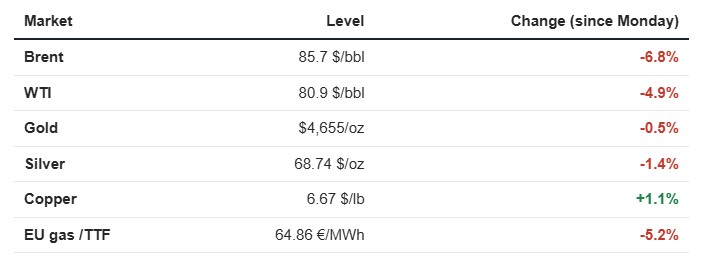
Source: Online/GFMM























Comment Now