




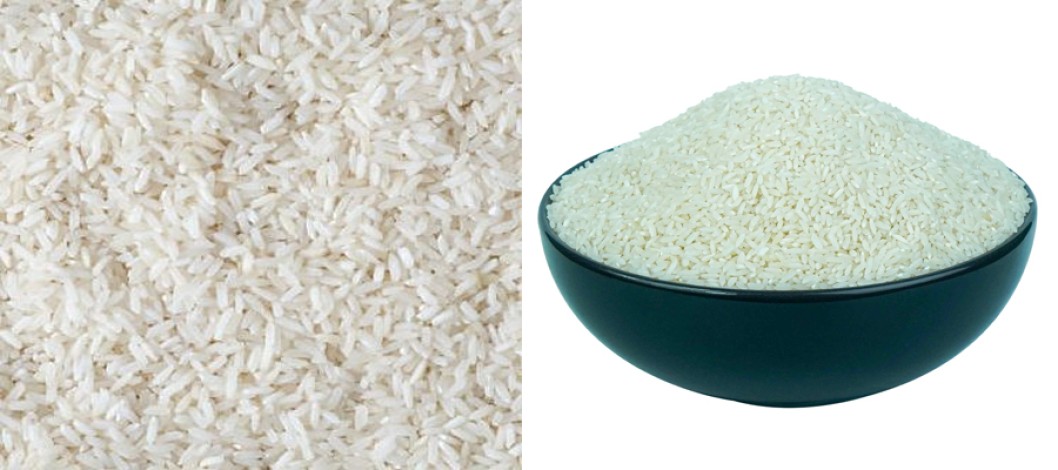
File photo
The price of polawa rice, which was sold for 100 taka per kg in Rajshahi six months ago, has now doubled. Traders say they have never seen the price of polawa rice increase so much in their lives.
Meanwhile, farmers said that the price at which they sold paddy during the production season is now almost double. However, no farmer has any paddy left in his house. This price hike has occurred after the farmer lost it. According to many farmers and traders, the price of polawa rice in the market has increased due to exports abroad. In the latest fiscal year 2025-26, three leading companies exported a total of 1,530 metric tons of rice.
Polawa rice is maily made from Bri-34 (sugar powder) paddy. Currently, the paddy rice of the last Aman season is being sold in the market.
According to the Department of Agricultural Extension (DAE), most of the country's Bri-34 (sugar powder) paddy is produced in Dinajpur. Apart from this, some production is also done in Thakurgaon and Panchagarh. This time, a target of paddy production has been set for 260,860 hectares of land in Dinajpur. Of this, sugarcane paddy has been cultivated on 95,000 hectares of land. Last year, this paddy was cultivated on 94,000 hectares of land.
Dinajpur District DAE Deputy Director Md. Afzal Hossain told Prothom Alo that fragrant rice made from sugarcane paddy is packaged and marketed by several big companies including Square Food and Beverage, Ispahani Agro and Pran Agro. He further said that Jahura Auto Rice Mill in Bochaganj Upazila of Dinajpur district processes and markets fragrant rice locally. Around 200 small and big auto rice mills have been established in the district focusing on this paddy. However, the farmers have not received the price at which paddy is being sold at present.
Jahangir Alam Khan, who works for a private organization in Rajshahi, was interviewed about the price of polava rice in Sahebbazar area of Rajshahi city on Wednesday. He said that he was shocked to buy polava rice after five months. Last time, he bought this rice for 140 taka per kg. This time, he had to buy it for 230 taka per kg. When he mentioned the previous price, the shopkeeper told him, 'Those days are gone.'
Taking up the topic of exports, Jahangir Alam said that various Bangladeshi products are available in supermarkets in the United States. Exports will happen. So why would the price increase overnight?
Md. Golap Sardar, the owner of a restaurant called Golap Mama's Hotel in Kumarpara area of Rajshahi city, said that six months ago, he bought polava rice for 130 taka per kg. Now, he has to buy it for 200 taka per kg. But he could not increase the price of polava accordingly.
Talking to wholesale rice traders in Rajshahi, it was learned that they are currently selling this rice for 180 to 200 taka per kg. The price is even higher in the retail market.
Ashok Prasad, proprietor of AP Chaul Bhandar-1 in Sahebbazar, Rajshahi city, said that the price started increasing after Eid-ul-Adha. It has increased by about 100 taka per kg. According to him, this price increase has surpassed all past records. The price has increased because rice is being exported. If exports are stopped, the price will come down again.
Jasim Uddin, a wholesale rice trader in the city's Kadirganj area, said that six months ago the price of this rice was 100 taka per kg, now it is 200 taka. This situation has arisen because the government has allowed some companies to export rice.
Jasim Uddin said that he is no longer stocking Polao rice. Two weeks ago, officials from the National Department of Consumer Rights Protection came to his shop. They argued with him about the price for about an hour. He was also fined Tk 10,000 for selling polawa rice at Tk 200 per kg. They said that the price of rice was not this high even 15 days ago, so how did the price increase in such a short time?
Jasim Uddin said that he had explained to the officials of the Consumer Affairs Department that they were buying rice from the company's warehouse at Tk 200 per kg. Transportation costs were added to this. They received a 10 to 20 percent commission on the purchase price. As a result, it was not possible to sell it for less than Tk 200. He said that the company's number is also given on the bag, and if you want, you can call and check the price. But even after giving so many explanations, there was no benefit. In his words, 'If exports stop today, tomorrow the price will decrease by Tk 50 per kg.'
On Wednesday, Prothom Alo spoke to Khaledul Islam, a farmer from Chakzamini Kazipara village in Parbatipur upazila of Dinajpur. He said that last season, a 75 kg bag of sugar-coated rice was sold for Tk 4,000 to 5,200. He cultivated this rice on three and a half bighas of land. When the price of rice rose to 5,200 taka, the farmer's rice in his house ran out. As a result, the farmers did not get the benefit of the increased price.
When contacted on mobile phone last Thursday (August 27, 2026), Habibur Rahman, a big farmer from Ambari village in Chirirbandar upazila of Dinajpur, said that last year he cultivated sugarcane rice on 36 bighas of land. This time, seeing the price increase, he cultivated this rice on 38 bighas of land. He also believes that the price has increased due to exports.
Atiar Rahman, a rice merchant in Dinajpur, said that when rice was harvested, a 75-kg sack was sold for 4,000 taka. Later, it rose to 6,000 taka. Now the price of that rice is 8,500 taka. When asked why the price has increased so much, he said that the price is high due to the shortage of rice in the area. When asked about exporting abroad, he said, "I can't say that, brother. It could be."
You can learn about South Asia's largest exhibition on this
topic through this link: http://graintechbd.com/
Source: Online/GFMM

















Comment Now