



A Turning Point for the Feed Industry
The global livestock, poultry, and aquaculture industries are undergoing a major transformation. Rapid population growth, rising demand for safe and high-quality animal protein, increasing production costs, and growing sustainability pressures have placed new responsibilities on the feed industry.
Feed remains the foundation of animal production. Even small improvements in feed quality, efficiency, and consistency can generate significant economic returns while reducing environmental impact. To meet these evolving challenges, the industry is entering a new era known as the Digital Feed Mill. This is not simply a machinery upgrade—it is a complete transformation of how feed is produced, monitored, optimized, and managed.
By integrating automation, data analytics, artificial intelligence (AI), Internet of Things (IoT), and cloud-based software, digital feed mills are redefining productivity, quality assurance, and profitability across the global feed industry.
What Is a Digital Feed Mill?
A Digital Feed Mill is an advanced feed manufacturing system where digital technologies control and optimize every stage of production using real-time data.
Unlike traditional feed mills—where operations rely heavily on manual observation and operator experience—digital feed mills operate on data-driven intelligence, ensuring higher accuracy, transparency, and consistency throughout the production cycle.
Key Features of a Digital Feed Mill
*Automated raw material handling and storage
*Digital feed formulation and recipe management
*Real-time process monitoring
*Automated quality control systems
*Energy and cost optimization
*End-to-end traceability and reporting
In essence, a digital feed mill transforms a conventional factory into a smart manufacturing facility.
Traditional Feed Mills vs. Digital Feed Mills
*Traditional Feed Mills
*Heavy reliance on manual operations
*Limited monitoring and data collection
*Higher risk of human error
*Inconsistent feed quality
*Difficulty tracking costs and losses
Digital Feed Mills
*High automation and precision
*Continuous real-time monitoring
*Reduced human error
*Consistent and uniform feed quality
*Strong control over production costs
This fundamental shift explains why digital feed mills are becoming essential for long-term competitiveness.

Core Technologies Behind Digital Feed Mills
Internet of Things (IoT)
IoT connects machines, sensors, and systems across the mill. Sensors continuously collect data on temperature, moisture, weight, flow rate, and equipment performance, enabling immediate corrective actions and optimal processing conditions.
Automation & PLC Systems
Programmable Logic Controllers (PLC) automate accurate dosing, grinding, mixing, pelleting, cooling, and packaging. Automation ensures uniform quality while significantly reducing labor dependency and operational errors.
Artificial Intelligence (AI) & Machine Learning
AI systems analyze historical and real-time data to optimize feed formulations, adjust recipes based on raw material prices, and predict equipment failures before they occur—reducing downtime and increasing operational efficiency.
Cloud-Based Software Platforms
Cloud solutions enable remote monitoring, centralized management of multiple feed mills, and real-time dashboards—allowing decision-makers to act faster and smarter from anywhere.
*Key Benefits of Digital Feed Mills
*Consistent Feed Quality
Accurate nutrient composition, uniform mixing, and stable pellet quality directly improve animal performance, feed conversion ratio (FCR), and health outcomes.
Reduced Production Costs
Minimized raw material losses, optimized energy usage, and reduced downtime significantly lower the cost per ton of feed produced.
Food Safety & Traceability
Digital records ensure full traceability from raw materials to finished feed, simplifying regulatory compliance and strengthening trust with farmers and export markets.
Smarter Decision-Making
Real-time analytics help management detect issues early, optimize inventory, and respond quickly to market demand—creating a strong competitive advantage.
Grain Tech Bangladesh Expo 2026- Connecting the Global Milling Technology Supply Chain

Role of Industry Events in Advancing Digital Feed Mills: The Grain Tech Bangladesh Exhibition: Driving Milling & Feed Technology Adoption
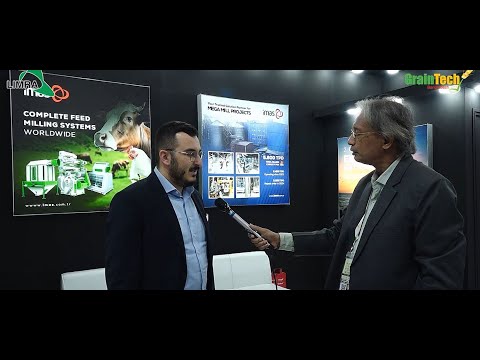
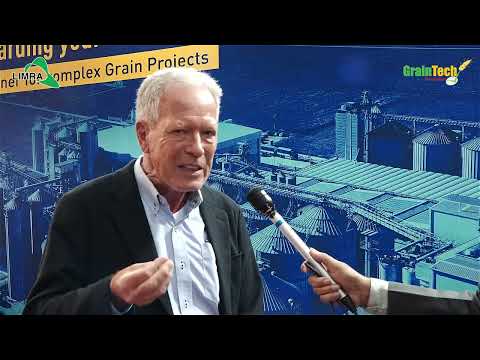
Events like Grain Tech Bangladesh – International Milling Technology Trade Show play a critical role in accelerating digital transformation in the feed and grain processing industries.
This platform allows feed millers, investors, and technology providers to:
*Explore the latest digital feed mill technologies
*Understand automation, AI, and smart milling solutions
*Connect with global equipment manufacturers and solution providers
*Learn international best practices for modern feed production
For emerging markets like Bangladesh, Grain Tech Bangladesh serves as a gateway to advanced feed milling innovation.
November 05-07. 2026 at ICCB, Dhaka, Bangladesh

November 05-07. 2026 at ICCB, Dhaka, Bangladesh
Feed Tech Expo: Connecting the Complete Feed Value Chain. Feed Tech Expo focuses on the entire feed industry ecosystem—from raw materials and additives to processing, packaging, and digital solutions.
Such exhibitions help industry professionals:
*Discover next-generation feed milling technologies
*Understand digitalization trends in feed manufacturing
*Network with global and regional feed industry leaders
*Gain insights through technical conferences and workshops
Feed Tech Expo acts as a catalyst for knowledge exchange and technology adoption in the feed sector.
Representative Voice of the Milling Industry
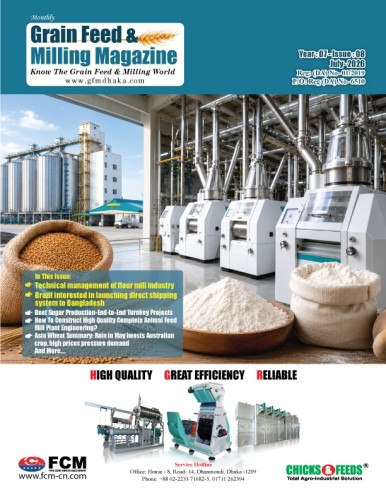
Knowledge Support from Grain Feed & Milling Magazine
Industry publications like Grain Feed & Milling Magazine play an equally important role in supporting digital transformation.
The magazine helps feed professionals by:
*Sharing global case studies of digital feed mills
*Publishing expert insights on automation, AI, and feed safety
*Highlighting new technologies and best practices
*Supporting informed decision-making for mill upgrades and investments
For feed mill owners and managers, Grain Feed & Milling Magazine is a valuable knowledge partner in adopting advanced feed milling technologies.

Opportunities in Bangladesh and Emerging Markets
Bangladesh’s poultry, dairy, and aquaculture sectors are expanding rapidly, yet many feed mills still operate with semi-automated systems.
Digital feed mills can enable:
*International-standard feed production
*Improved export competitiveness
*Higher farmer profitability
*Stronger national food security
For corporate groups and new investors, digital feed mills represent a future-ready strategic investment.
Challenges to Implementation
Key challenges include:
*High initial capital investment
*Shortage of skilled technical professionals
*Limited awareness of digital solutions
*Data security concerns
However, the long-term ROI, efficiency gains, and sustainability benefits clearly outweigh these barriers.
The Future of Feed Manufacturing
The feed mill of the future will be:
*Fully automated
*AI-driven and data-centric
*Energy-efficient and environmentally responsible
*Capable of producing customized feeds for specific farms
Digital feed mills will become a core component of smart agriculture ecosystems, seamlessly connecting feed producers, farmers, and supply chains.
The Time to Go Digital Is Now
Digital feed mills are no longer optional—they are a strategic necessity. Companies that adopt digital technologies today will lead tomorrow’s feed industry, while those that delay risk falling behind. By improving feed quality, reducing costs, enhancing food safety, and supporting sustainability, digital feed mills truly represent the next revolution in the feed industry. The future belongs to those who embrace digital transformation today.
---









Comment Now