




File photo
Isabgul husk is a must-have for treating various problems, including stomach problems. This name is familiar to almost every household in Bangladesh. However, almost all of the Isabgul you mix in your glass every day is foreign. Isabgul is completely dependent on imports.
According to the National Board of Revenue (NBR) Customs Department, about 2,700 tons of Isabgul husk were imported into the country in the last fiscal year 2025-26. It cost about 9.5 million dollars or about 108 crore taka. All of it was imported from India. Because, no Isabgul is produced commercially in the country.
However, scientists started experimental cultivation of Isabgul for the first time in Bangladesh eight years ago. Experimental Isabgul cultivation was also carried out last winter season. Although Isabgul seeds were obtained from the tree, the husk could not be collected from it. Because, there is no machine to break Isabgul seeds and make husk in our country. As a result, commercial cultivation of this product could not be started in the end.
Where does the name Isabgul come from
Isabgul is basically a herbal plant. It has been used in healthcare for many years. Its scientific name is Plantago ovata, commercially it is known as blond psyllium.
The Indian Council of Agricultural Research (ICAR) has conducted a study on the commercial potential of Isabgul. The research report was also published in the research journal Research Gate in 2023. The report says that the word Isabgul is a combination of the Persian words 'Asb' (horse) and 'Gul' (ear); which means 'horse's ear'. Basically, the shape of Isabgul seeds looks a lot like a horse's ear; hence the name.
According to the ICAR report, Isabgul originated mainly in the Mediterranean coastal regions and West Asia (Middle East). Later, it spread to South Asia and Europe, North Africa and other regions. It was first introduced to the Indian subcontinent by Persian and Arab merchants in the Middle Ages. Later, during the Mughal and British eras, commercial cultivation of Isabgul increased in India due to its medicinal properties.
Top producer and exporter in India
Currently, India is the top country in the production of Isabgul in the world. The country also exports the most. The Indian states of Gujarat, Rajasthan and Madhya Pradesh are the main and original production areas of Isabgul. Later, this cultivation spread to the states of Punjab, Haryana, Uttar Pradesh and Karnataka. There are large Isabgul processing factories in Gujarat, India, where husk is produced from Isabgul seeds. Isabgul is also cultivated in several countries including the United States, Pakistan, France, and Russia.
India is the top exporter of Isabgul in the international market. India supplies about 80 percent of the psyllium husk or Isabgul in the global market. According to the data of the Ministry of Commerce and Industry of India, India exports about 50 thousand tons of Isabgul husk and seeds every year. The market for Isabgul husk in India is worth about Rs 500 crore.
According to the Indian Council of Agricultural Research, the largest single buyer of Indian Isabgul is the United States. The country buys 50 percent of India's exported Isabgul. Apart from this, there is a huge demand for the product in various European and Asian countries including Germany, the UK and Italy.
What is the price of Isabgul husk in the country
Md. Sagar, a spice seller at Mohammadpur Agricultural Market, said that currently, per kg of Isabgul husk is sold at an average of Tk 1,500 in the retail market. If the quality is good, the price is even higher. Buying 100 grams of good quality open Isabgul in retail costs at least Tk 150. Various well-known and unknown brands in the market sell Isabgul husk in plastic containers. Their prices are relatively high. For example, the price of 60 grams of Isabgul husk is Tk 160-170.
A market review shows that the price of Isabgul husk has increased by about 88 percent in the last eight years. For example, in June 2017, the price of one kg of isabgul husk was 800 taka. By the end of 2022, that price had increased to 1,200 taka. In 2024, during Ramadan, the price of isabgul husk increased to about 2,000 taka per kg. After Ramadan, however, the price decreased by 200-300 taka per kg.
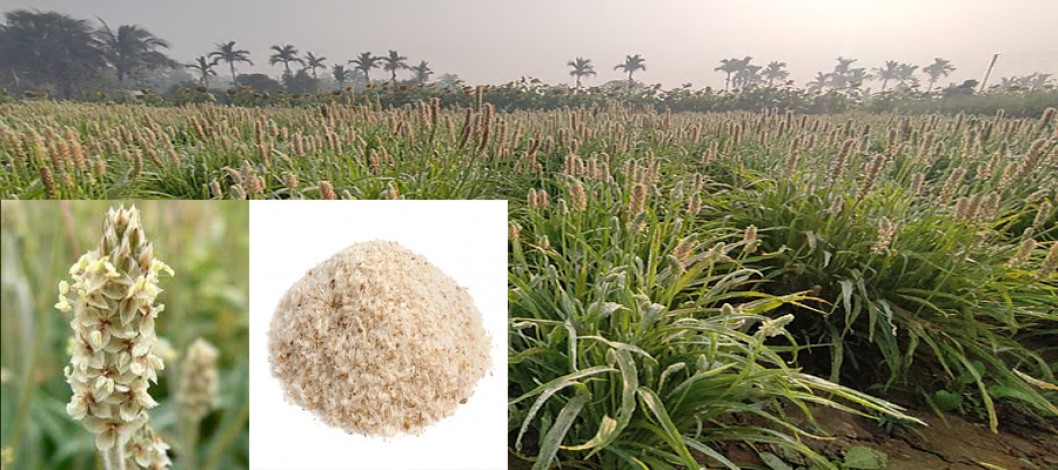
Isabgul husk is mainly imported from India. In the last fiscal year, about 2,700 tons of isabgul husk were imported from the country. Apart from this, traders have alleged that a significant amount of isabgul husk is brought into the country illegally (by evading customs duties). Scientists at the Bangladesh Agricultural Research Institute (BARI) have been conducting experimental research on isabgul cultivation in the country since 2019. Isabgul trees have been planted at the Regional Spice Research Center in Magura
Scientists at the Bangladesh Agricultural Research Institute (BARI) have been conducting experimental research on isabgul cultivation in the country since 2019. Isabgul plants have been planted at the Regional Spice Research Center in Magura. Photo: Courtesy of Regional Spice Research Center, Magura.
Benefits of Isabgul
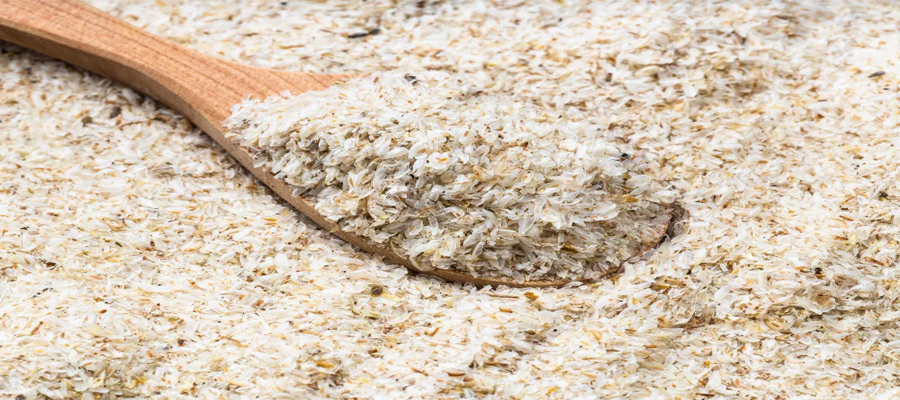
Isabgul husk is a very powerful prebiotic. Its high fiber content quickly creates colonies of beneficial bacteria in the intestines, facilitating the digestion process and reducing the rate of any intestinal infection. Former Principal of Dhaka Medical College, Professor Md. Titu Mia said that Isabgul husk is very beneficial for those who have constipation problems. Because it contains a lot of water.
Currently, information is known about the use of Isabgul in some other industrial sectors. According to a report in the Times of India, food processing companies are increasing the use of Isabgul in bakery products, especially digestive biscuits. The textile and cosmetic sectors have also started using Isabgul husk in dyeing, printing and product manufacturing. Again, Isabgul seeds are being used as protein-rich cow feed.
First attempt at Isabgul cultivation in the country
Scientists of the Bangladesh Agricultural Research Institute (BARI) have been conducting experimental research on Isabgul cultivation in the country since 2019. They have achieved success by conducting experimental cultivation in Bogra, Gazipur, Lalmonirhat and Faridpur. According to them, Isabgul can be cultivated as a Rabi crop in almost all regions of the country except for excessively saline areas and waterlogged lands.
Reazul Islam, scientific officer of the Regional Spice Research Center in Magura, said that Isabgul is a very short-term crop—only 110 to 120 days. The seeds can be sown in November and the crop can be harvested in mid-February or early March. The maximum cost of Isabgul cultivation in one bigha (33 acres) of land can be 15,000 taka. From there, about 100 kg of yield can be obtained per bigha of land. It is possible to earn about 30-40 thousand taka by selling the Isabgul seeds produced in one bigha of land. And if the husk is sold, the income can be up to one lakh taka per bigha. It does not require much irrigation, fertilizer or pesticides and there are very few diseases. However, there is no machine in the country to break the seeds of Isabgul and make husk.
Scientific Officer Riazul Islam said, ‘Isabgul grows well in our country’s climate. But the process of breaking the seeds and making husk is a bit complicated. Currently, there is no suitable technology or equipment for this in our country. That is why we are not asking farmers to cultivate it commercially yet.’
You
can learn about South Asia's largest exhibition on the agricultural topic
through this link: http://graintechbd.com/

















Comment Now