



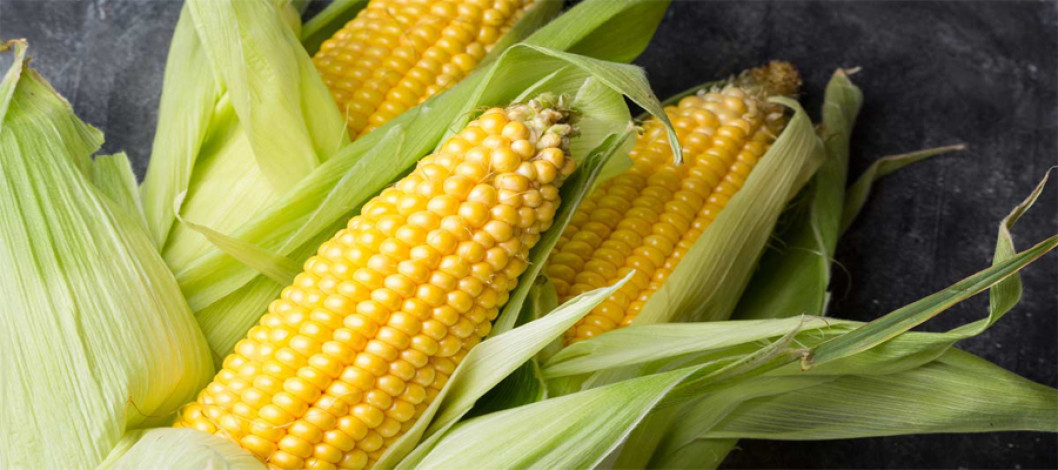
File Photo
Corn, also known as Maize, is one of the most widely produced crops in the world. It is a staple food, used as animal feed, and is also an important ingredient in numerous industrial processes. Maize production is important for world trade, the agricultural economy, and global food security. Maize producers contribute to global development efforts by ensuring a constant and sufficient supply of the crop for domestic consumption and export. In fact, slightly higher maize production in some of the largest maize-producing countries could help reduce hunger and malnutrition and improve the general well-being of people worldwide, especially in countries and regions that are highly dependent on maize, such as Nigeria, Malawi, and Guatemala.
Top corn producers in the world
Major corn-producing nations play an important role in global trade, with their corn exports enabling countries to satisfy domestic demand and take part in regional and international trade networks. Supporting transparent and equitable trade norms and facilitating access to market developing countries are some of the main goals of international development initiatives.
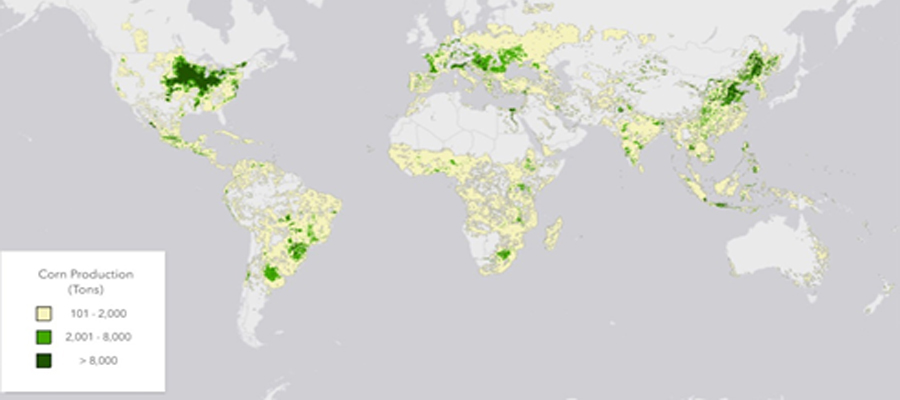 Corn production world map
The United States of America
Corn is the most important fodder crop in the United States, accounting for over 95% of the country’s fodder output and use. The US is the world’s biggest producer of corn, accounting for 32% of global corn production – or almost 390 million metric tons. Every year, farmers in the United States plant approximately 90 million acres of corn.
China
Based on the March report from WASDE, China’s estimated corn production for 2023–2024 grew by 4.2% to reach 288.8 million tons, despite early concerns that crops in the regions with high productivity had been harmed by typhoons and heat. A record corn yield was achieved as a result of a larger area being planted and higher precipitation, and also due in part to improvements in agricultural policy.
Brazil
Brazil has increased its corn acreage by 72% during the past 20 years, from 31.6 million acres in 2003 to nearly 55 million acres in 2022. The latest data shows that Brazil produced 124 million metric tons of corn, which constitutes around 10% of the total global production of the crop. The American Foreign Agricultural Service (FAS) predicts that Brazil’s corn output will reach 129 million metric tons in the 2024–25 crop year.
European Union
Because feeding livestock requires additional nutrition in the form of protein, the EU’s need for corn is being driven by the rapidly expanding livestock sector and the commercial compound feed business. Additionally, as people’s awareness of their health has grown, they have developed a taste for diets high in protein, which has increased demand for grains like corn.
Romania, France, and Poland are the EU’s biggest corn producers. Today, the region produces over 60 million metric tons of corn, with 63.7 million tons expected to be harvested in 2024.
See also: https://graintechbd.com/
Argentina
The corn industry plays a crucial role in this country, and today Argentina ranks third in terms of corn exports, following Brazil and the U.S. However, Argentina’s corn crop has had an emotional ride in the past few years. Despite the fact that the country is experiencing its worst drought in over 60 years, which has repeatedly caused drastic harvest reduction, it still managed to remain in the top 5 major corn producers.
During the 2021/2022 season, corn production decreased by 3 million tons, dropping to 49.5 million. The following season, the fall was even more painful, with corn production being 36 million tons. However, the 2023/2024 season registered a huge recovery and, as a result of favorable weather conditions, the production figure hit 56 million tons.

The top 10 biggest corn-producing nations play a crucial role in supplying the world with this important crop. With their large corn production capacities, these countries not only help to ensure global food security but also have a huge influence on agriculture and worldwide trade.
At the same time, corn production faces serious issues such as natural hazards, pests, and diseases, which all have a serious impact on the sector in both developing and developed countries. While developing countries face issues, developed countries can utilize developments in agricultural practices, technology, and research to stabilize and even increase the productivity and efficiency of corn farming. Finally, it is worth noting that in order to preserve the long-term survival and resilience of the corn sector, the major corn-producing nations need to concentrate on sustainable farming practices, resource management, and innovation.
See also: https://www.dpexpobd.com/
Source: Online/GFMM




















Comment Now